
Asakusa Shrine (Sanja-sama) vs. Sensoji Temple: History & Goshuin (2026)

"Just 30 seconds east of Sensoji's bustling Main Hall stands a quiet stone torii gate—Asakusa Shrine (Sanja-sama), the surviving 1649 Shinto sanctuary that enshrines the three human founders of Sensoji and hosts Tokyo's famous Sanja Matsuri."
Nearly 30 million visitors walk beneath Kaminarimon Gate every year to pray at Kinryuzan Sensoji, Tokyo's oldest Buddhist temple. Yet most travelers walk right past the stone torii standing immediately to the right (east) of Sensoji's Main Hall without realizing it marks a completely separate institution: Asakusa Shrine (浅草神社), affectionately revered by locals as Sanja-sama ("Shrine of the Three Deities"). Why do a Buddhist temple and a Shinto shrine sit side by side? How did Asakusa Shrine survive the 1945 air raids that burned Sensoji to the ground? And why must you change your prayer etiquette between the two halls? Here is the complete historical and practical guide.
At a Glance: Four Essential Facts About Asakusa Shrine (Sanja-sama)
- Shinto Shrine vs. Buddhist Temple: Sensoji is a Buddhist temple enshrining Kannon Bosatsu (silent Gassho, never clap), whereas Asakusa Shrine is a Shinto shrine enshrining Sensoji's three 7th-century human founders (2 bows, 2 claps, 1 bow).
- True Host of Sanja Matsuri: Tokyo's wildest May festival—Sanja Matsuri (the Friday–Sunday anchored on the third Saturday of May)—is the annual grand festival of Asakusa Shrine, not Sensoji Temple.
- Original 1649 Wooden Architecture: Built by Shogun Tokugawa Iemitsu in 1649, Asakusa Shrine miraculously survived both the 1923 earthquake and 1945 WWII air raids and is a National Important Cultural Property.
- Goshuin & Hidden Gems: The shrine office (Weekdays 9:00 AM–4:00 PM; Weekends & Holidays 9:00 AM–4:30 PM) bestows ¥500 Goshuin seals alongside the beloved Meoto Komainu (wedded guardian lion-dogs) and Hikan Inari Shrine.
Preparing for your Asakusa pilgrimage or reflecting from afar? Draw a traditional Japanese fortune slip online once daily for free.
1. Asakusa Shrine (Sanja-sama) vs. Sensoji Temple: Side-by-Side Comparison
Asakusa Shrine and Sensoji Temple differ fundamentally in religion, architecture, and etiquette: Sensoji is a Sho-Kannon Buddhist temple reconstructed in reinforced concrete in 1958 where visitors pray with silent joined palms, while Asakusa Shrine is a Shinto sanctuary preserving original 1649 wooden halls where worshippers bow twice, clap twice, and bow once to the three founders who discovered Sensoji's Kannon statue.
| Feature | Asakusa Shrine (Sanja-sama) | Kinryuzan Sensoji Temple |
|---|---|---|
| Tradition | Shinto Shrine (Guardian shrine of Asakusa's 44 districts) | Buddhist Temple (Head temple of Sho-Kannon Buddhism) |
| Enshrined Figures | Hajino Matsuchi no Mikoto, Hinokuma Hamanari no Mikoto & Hinokuma Takenari no Mikoto | Sho-Kanzeon Bosatsu (Kannon, hidden Bodhisattva of Compassion) |
| Current Sanctuary | Original 1649 wooden Gongen-zukuri (Important Cultural Property; survived WWII) | 1958 reinforced-concrete reconstruction (after March 1945 firebombing) |
| Prayer Etiquette | 2 Bows, 2 Claps, 1 Bow (Nirei Nihakushu Ichirei) after stone torii bow | Silent Gassho (incense smoke purification; palms joined with zero clapping) |
| Signature Festival | Sanja Matsuri (Fri–Sun anchored on the 3rd Saturday of May; 3 sacred Honsha Mikoshi) | Kinryu-no-Mai Golden Dragon Dance (Mar 18 & Oct 18), Hozuki-ichi (Jul 9–10) |
| Goshuin & Omikuji | Shrine Shamusho (Weekdays 9:00 AM–4:00 PM; Weekends/Holidays to 4:30 PM, ¥500 Goshuin; ¥100–¥300 shrine omikuji) | Yogodo Hall Goshuin; ¥100 Kannon Hyakusen omikuji (30% Kyo) |
For a broader look at distinguishing torii gates from temple sanmon gates across Japan, read our Complete Guide to Shinto Shrines vs. Buddhist Temples.
2. The 628 CE Sumida River Discovery & 1868–1873 Shinbutsu Bunri Separation
Asakusa Shrine and Sensoji share a single origin on March 18, 628 CE, when two fisherman brothers pulled a golden Kannon statue from the Sumida River and a learned local chieftain converted his home into a temple to enshrine it; their descendants later revered all three men together as Sanja Daigongen until Meiji-era religious separation formally established the independent Asakusa Shrine in 1873.
Why Is It Called "Sanja-sama"? The Three Founders Enshrined as Kami
According to shrine and temple chronicles, on the morning of March 18, 628 CE (the 36th year of Empress Suiko), two brothers fishing on the Miyato River (today's Sumida River)—Hinokuma Hamanari and Hinokuma Takenari—caught a small golden statue in their net. Each time they cast it back into the water, the statue returned to their net. Carrying it ashore to their cultured local lord, Hajino Matsuchi, they learned it was a sacred image of Sho-Kanzeon Bosatsu (Kannon). Deeply moved, Hajino Matsuchi took Buddhist vows, transformed his own residence into a temple (Sensoji), and devoted his life to venerating the image.
Later tradition records an oracle from Kannon declaring that honoring the three men who brought the image into the world as protective deities would bring enduring prosperity to the district. Enshrined together as three Shinto Kami—Hajino Matsuchi no Mikoto, Hinokuma Hamanari no Mikoto, and Hinokuma Takenari no Mikoto—they gave the shrine its beloved nickname Sanja-sama ("Three Shrines / Three Deities") and its distinctive triple-fishing-net crest (Mitsuami-mon).
From 1,200 Years of Syncretism to the 1873 Renaming
For more than a millennium under Japan's Shinto-Buddhist syncretism (Shinbutsu Shugo), the shrine stood within the Sensoji precinct under the syncretic title Sanja Daigongen-sha. When the new Meiji government issued the 1868 Separation of Shinto and Buddhism Edict (Shinbutsu Bunri-rei), Buddhist terminology was removed: the sanctuary became Sanja Myojin-sha in 1868 and received its permanent name Asakusa Jinja (Asakusa Shrine) in 1873 (Meiji 6) as the official guardian shrine of Asakusa's 44 neighborhoods.
3. Surviving 1649 Gongen-zukuri Halls, Meoto Komainu & Hikan Inari Shrine
Commissioned in 1649 (Keian 2) by the third Tokugawa Shogun, Tokugawa Iemitsu, Asakusa Shrine's interconnected wooden sanctuary survived both the 1923 Great Kanto Earthquake and the March 10, 1945 Tokyo firebombing, earning designation as a National Important Cultural Property in 1951 alongside two beloved courtyard landmarks: the side-by-side Meoto Komainu wedded guardian statues (for marital harmony) and the 1855 Hikan Inari Shrine (for career advancement).
- 1649 Gongen-zukuri Sanctuary (Important Cultural Property): Linking the inner sanctuary (Honden) and worship hall (Haiden) via a stone-floored offering hall (Heiden), the vermilion-lacquered structure preserves early-Edo carvings of auspicious phoenixes, flying dragons, and mythological kirin beneath its eaves—standing untouched just meters from where Sensoji's old Main Hall burned in 1945.
- Meoto Komainu (Wedded Guardian Lion-Dogs): Just right of the stone torii, tucked in the grove beside the Kaguraden dance pavilion, sits an extraordinary Edo-period pair of Komainu guardian statues. Unlike ordinary shrine lion-dogs separated on opposite sides of the path, Asakusa Shrine's Meoto Komainu lean side by side together on the same flank, drawing couples and singles praying for lasting marriage and harmonious partnership.
- Hikan Inari Shrine (1855 Career & Promotion Sub-Shrine): Tucked behind the northeast corner of the main sanctuary stands a charming wooden Inari shrine dedicated in 1855 (Ansei 2) by legendary Edo firefighter chief Shinmon Tatsugoro after prayers to Kyoto's Fushimi Inari Taisha cured his wife's grave illness. Because Hikan (被官) literally means "receiving official rank or post," job seekers, actors, and entrepreneurs visit to pray for career breakthroughs—and its 1855 wooden hall likewise survived WWII intact.
4. Combined Worship Route, ¥500 Goshuin Etiquette & Sanja Matsuri
To visit both Asakusa landmarks with proper Japanese etiquette, complete Sensoji first with silent joined palms (Gassho), walk 30 seconds east through Asakusa Shrine's stone torii to purify your hands and pray with two bows, two claps, and one bow, then visit the shrine office between 9:00 AM and 4:00 PM on weekdays (until 4:30 PM on weekends and holidays) for hand-stamped ¥500 Goshuin seals—remembering too that Tokyo's famous Sanja Matsuri (held on the Friday, Saturday, and Sunday anchored on the third Saturday of May) is the grand annual festival of Asakusa Shrine rather than Sensoji Temple.
Offer Silent Gassho First at Sensoji Temple (Never Clap)
Walk down Nakamise-dori through Hozomon Gate, waft incense smoke toward yourself at the bronze burner, and pray to Kannon Bosatsu at Sensoji's Main Hall by pressing your palms silently together (Gassho) without clapping.
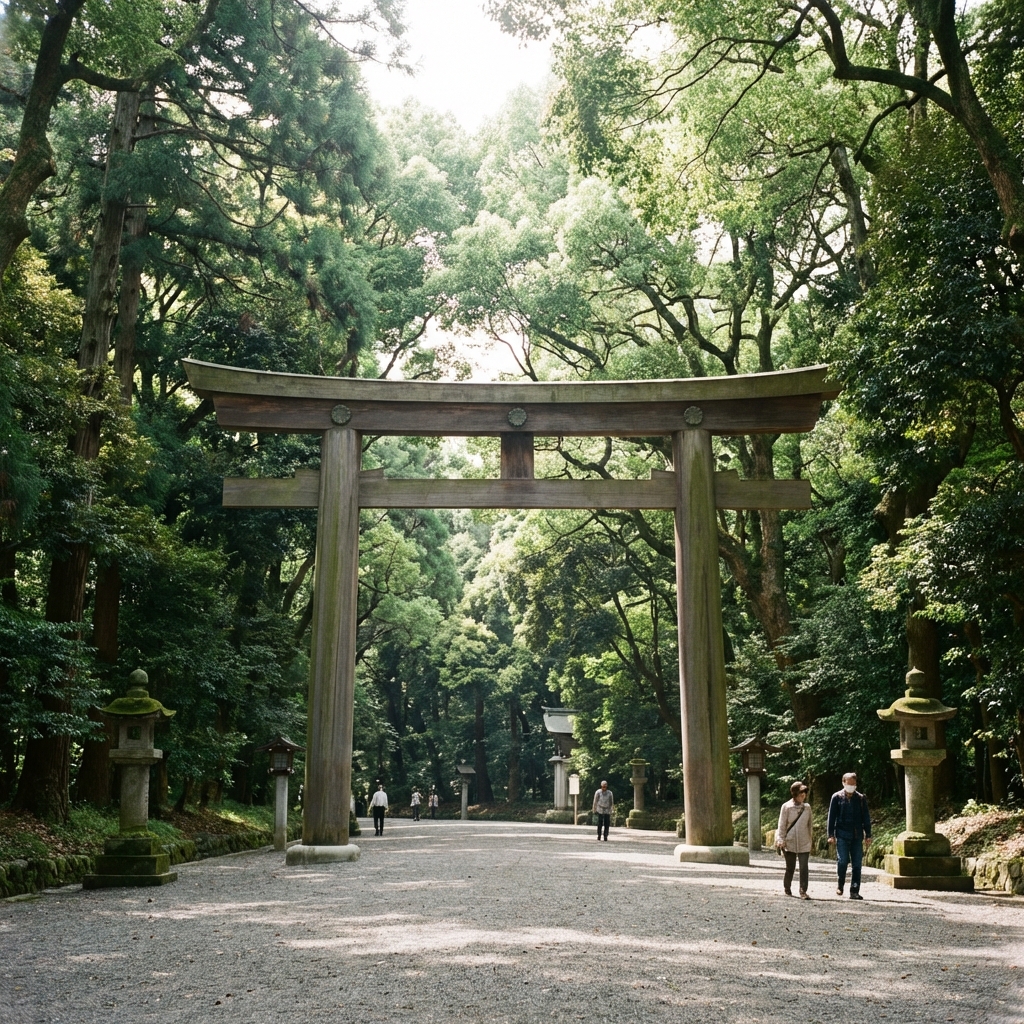
Step East Through Asakusa Shrine's Stone Torii & Purify at Temizuya
Turn right (east) from Sensoji's front plaza and bow once before stepping beneath Asakusa Shrine's stone torii, walking slightly off-center so the middle path remains clear for the Kami. Rinse your left hand, right hand, mouth (from your cupped left palm), and ladle handle at the water pavilion (see our Temizuya Purification Guide).
Switch to Shinto Etiquette: Two Bows, Two Claps, One Bow
At Asakusa Shrine's 1649 worship hall, place a coin gently into the offering box, bow deeply twice (90 degrees), clap twice crisply at chest level, pray silently in gratitude, and bow deeply once more—then visit the Meoto Komainu and Hikan Inari Shrine behind the hall.
Request ¥500 Goshuin (Weekdays 9:00–4:00 / Weekends & Holidays to 4:30) & Experience May's Sanja Matsuri
To the right of the worship hall, the Shamusho office issues Goshuin seals for Asakusa Shrine, Hikan Inari Shrine, and Asakusa Shichifukujin Ebisu at ¥500 Hatsuhoryo each (open Weekdays 9:00 AM–4:00 PM; Weekends & Holidays 9:00 AM–4:30 PM; see Goshuin Etiquette Rules). Every May on the Friday, Saturday, and Sunday anchored on the third Saturday, over 1.8 million spectators gather as Asakusa Shrine's three sacred portable shrines (Ichinomiya, Ninomiya, Sannomiya) and roughly 100 neighborhood mikoshi parade across Asakusa in the legendary Sanja Matsuri.
5. Asakusa Shrine Hours, Fees & Access Summary
Asakusa Shrine stands immediately east of Sensoji Main Hall at 2-3-1 Asakusa, Taito Ward, Tokyo—about a 7-minute walk from Asakusa Station—with 24-hour free precinct admission and staffed Shamusho counters open 9:00 AM–4:00 PM on weekdays and 9:00 AM–4:30 PM on weekends and holidays (¥100 standard omikuji and ¥500 per Goshuin seal).
| Shrine Name | Asakusa Shrine (浅草神社 / Colloquially Sanja-sama, Guardian Shrine of Asakusa) |
|---|---|
| Enshrined Kami | Hajino Matsuchi no Mikoto, Hinokuma Hamanari no Mikoto, Hinokuma Takenari no Mikoto (plus Tokugawa Ieyasu) |
| Opening Hours | Precinct Grounds: Open 24 hours (free admission) / Shamusho Office, Amulets & Goshuin: Weekdays 9:00 AM–4:00 PM / Weekends & Holidays 9:00 AM–4:30 PM |
| Hatsuhoryo Fees | Standard Goshuin (Asakusa Shrine, Hikan Inari, Ebisu): ¥500 each / Paper Omikuji: ¥100 (Sea-bream Tai-mikuji: ¥300) |
| Location & Access | 2-3-1 Asakusa, Taito-ku, Tokyo (7-min walk from Asakusa Station on Tokyo Metro Ginza Line, Toei Asakusa Line, or Tobu Skytree Line; adjacent east of Sensoji Main Hall) |
Stepping thirty paces east from Sensoji's crowds into Asakusa Shrine reveals four centuries of unburned Edo craftsmanship and the human gratitude that gave birth to Asakusa itself. Explore more capital sanctuaries in our Best Shrines in Tokyo Guide and browse Japan's sacred heritage in our Shrine Directory.
Frequently Asked Questions
- What is the difference between Asakusa Shrine (Sanja-sama) and Sensoji Temple?
- Sensoji is Tokyo's oldest Buddhist temple enshrining Kannon Bosatsu, whereas Asakusa Shrine (fondly called Sanja-sama), standing immediately east of Sensoji's Main Hall, is an independent Shinto shrine honoring the three historical founders who drew the golden Kannon image from the Sumida River in 628 CE. Separated by the 1868 Shinbutsu Bunri edict and renamed in 1873, Asakusa Shrine preserves original 1649 Gongen-zukuri wooden halls that survived both the 1923 earthquake and 1945 air raids.
- How does prayer etiquette differ between Sensoji Temple and Asakusa Shrine?
- At Buddhist Sensoji Temple you never clap—simply join your palms silently in Gassho. Just steps away at Shinto Asakusa Shrine, offer standard Shinto worship: two deep bows, two crisp claps, silent gratitude, and one final bow (Nihai Nihakushu Ippai). Asakusa Shrine—not Sensoji Temple—also hosts Tokyo's famous Sanja Matsuri on the Friday, Saturday, and Sunday anchored on the third Saturday of May.
- What are Asakusa Shrine's Goshuin hours, fees, and hidden highlights?
- While the outdoor precinct stays open 24 hours daily, the shrine office (Shamusho) issues amulets and Goshuin calligraphy seals from 9:00 AM to 4:00 PM on weekdays and 9:00 AM to 4:30 PM on weekends and holidays. Standard Goshuin carry a ¥500 Hatsuhoryo offering each for Asakusa Shrine, the 1855 Hikan Inari auxiliary shrine (revered for career advancement), and Ebisu; don't miss the side-by-side Meoto Komainu guardian pair symbolizing marital harmony.
Draw Your Omikuji Online
Draw an authentic omikuji at our digital shrine to discover your fortune and receive a sacred message.
More Japanese shrine traditions

October 29, 2026
Sensoji Temple Omikuji Guide: Why 30% Draw Kyo & All 7 Levels (2026)
Why do 30% draw Kyo (bad fortune) at Asakusa Sensoji Temple? See exact Kannon Hyakusen 100-slip odds (17% Daikichi, 0% Chukichi), ¥100 ritual & tying rules.

February 12, 2026
Shrine vs Temple in Japan: 5 Major Differences & Prayer Etiquette (2026)
Shrine vs temple in Japan: what's the difference? Complete guide to distinguishing Shinto shrines (Jinja) from Buddhist temples (Otera): Torii gates, 2-clap etiquette, and deities.
January 31, 2026
Best Shrines in Tokyo: Top 12 Japanese Shrines for First-Time Visitors (2026)
Discover the best shrines in Tokyo for tourists. From Meiji Shrine to hidden local gems, this guide covers the top 12 must-visit Shinto shrines in Tokyo with access, tips, and what makes each special.