
Jizo Statues in Japan: Meaning of Red Bibs, Etiquette & 4 Temples (2026)
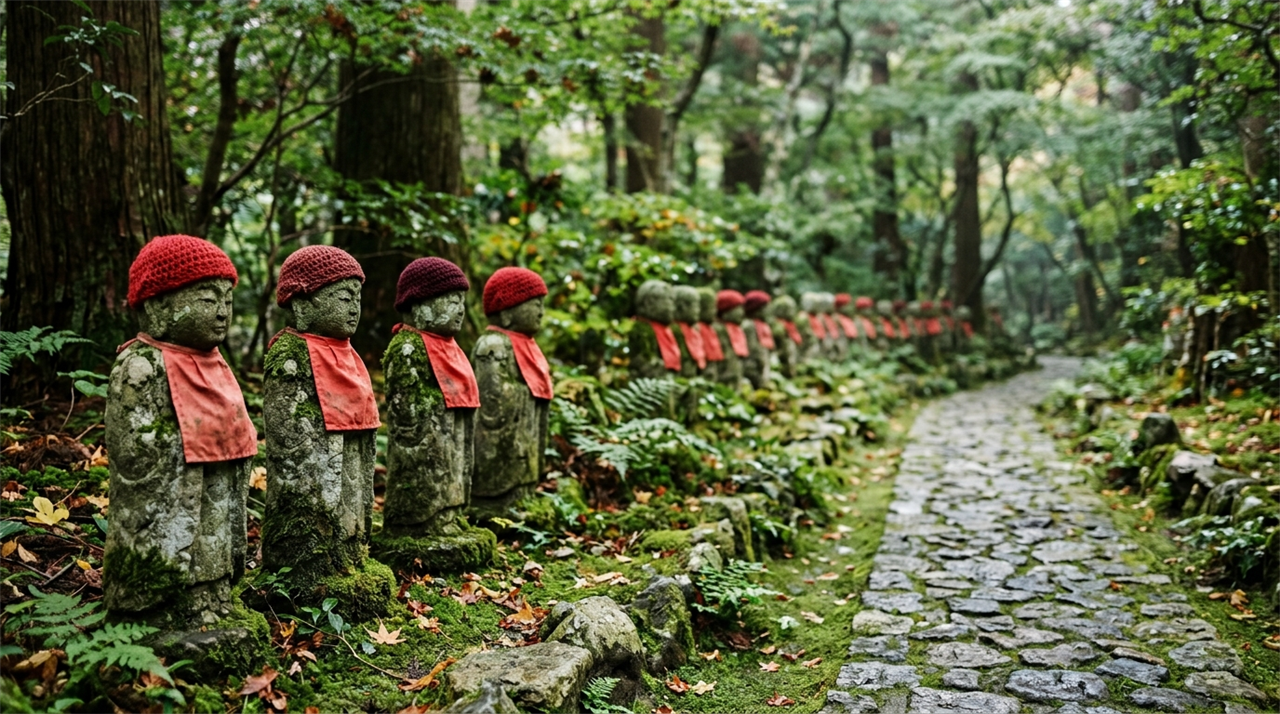
"Small stone figures in hand-sewn red bibs and woolen caps—standing watch at temple gates, mountain passes, and quiet neighborhood corners across Japan."
Known affectionately as O-Jizo-sama (お地蔵様), Jizo Bosatsu (地蔵菩薩, Sanskrit Kṣitigarbha) is one of the most beloved Buddhist Bodhisattvas in Japan. Far from being eerie roadside relics, these stone statues embody parental tenderness, protection for travelers and living children, and quiet comfort for departed little souls (mizuko). This guide explains who Jizo is, why statues wear red bibs, knit caps, and pinwheels, how Rokujizo and native Doso-jin deities merged along Japanese roads, respectful Buddhist worship etiquette, and four landmark temples in Tokyo, Kyoto, and Kamakura.
While Jizo belongs strictly to Japanese Buddhist tradition, traditional paper fortunes (omikuji) are shared across both Buddhist temples and Shinto shrines throughout Japan. Pause for a quiet moment and draw a free traditional fortune slip today.
30-Second Summary: Jizo Statues in Japan
- Identity (Kṣitigarbha): Jizo Bosatsu ("Earth Womb / Earth Treasury") is a compassionate Buddhist Bodhisattva who vowed to defer final Buddhahood until every suffering being across the Six Realms (六道) is rescued—revered as guardian of children, expectant mothers, travelers, and deceased children (mizuko).
- Red Bibs, Knit Caps & Pinwheels: Red (aka) symbolizes vitality and warding off illness and evil (mayoke, historically linked with protection from smallpox and measles). Devotees offer bibs (yodarekake), knitted hats (bōshi), and pinwheels (kazaguruma) in gratitude for healthy children or as tender memorial care to keep departed souls warm.
- Rokujizo & Doso-jin: Rows of six statues (Rokujizo) represent Jizo guiding beings in all Six Realms, while centuries of syncretism with native Doso-jin (道祖神) boundary deities explain why stone Jizo also watch over rural lanes and city street corners.
- Strictly Buddhist Etiquette: Jizo is Buddhist, not Shinto. Offer quiet Gassho (合掌, palms together) and a gentle bow—never clap, never touch or move offerings, photograph discreetly, and keep voices low near memorial grounds.
1. Who Is Jizo Bosatsu (Kṣitigarbha)? The Earth-Womb Bodhisattva
In Mahayana Buddhism, Jizo Bosatsu (地蔵菩薩) translates the Sanskrit name Kṣitigarbha, meaning "Earth Womb" or "Earth Treasury." Just as the earth quietly bears every footstep and nurtures every seed without distinction, Jizo represents steadfast, boundless compassion that reaches into the darkest corners of suffering.
According to Buddhist scripture, Jizo made an extraordinary vow to defer attaining final Buddhahood until all suffering beings across the Six Realms of rebirth (六道, Rokudō) are liberated. Rather than remaining aloof in a distant paradise, he walks continuously through every level of existence to comfort, guide, and rescue souls in distress.
That vow shapes how Jizo looks. Whereas most Buddhist Bodhisattvas wear royal crowns, silk scarves, and jeweled ornaments, Jizo appears in the humble guise of a shaved-headed mendicant monk dressed in simple robes—most commonly holding a six-ringed monk's staff (shakujō) in his right hand and a luminous wish-fulfilling jewel (hōju) in his left. Over centuries in Japan, this approachable figure grew into four deeply cherished protective roles:
- Guardian of Living Children: Families pray before neighborhood and temple Jizo for safe infancy, resilience against childhood illnesses, and healthy growth.
- Protector of Expectant Mothers: Revered for safe pregnancy and childbirth, Jizo offers quiet reassurance during one of life's most vulnerable transitions.
- Guide for Travelers: Positioned along mountain trails, bridges, and village crossroads, Jizo has long watched over pilgrims, merchants, and wayfarers journeying far from home.
- Compassionate Protector of Deceased Children (Mizuko): In Japanese folk-Buddhist devotion, Jizo shelters infants and young children lost before their parents—including miscarried or stillborn babies—welcoming them gently into his monastic sleeves. To understand how Japanese families honor departed loved ones throughout the year, see our Obon Ancestors Festival Guide.
Draw an authentic omikuji at our digital shrine to discover your fortune and receive a sacred message.
2. Why Do Jizo Statues Wear Red Bibs, Knit Caps & Pinwheels?
For first-time visitors to Japan, few sights prompt more curiosity than rows of weathered stone statues dressed in bright scarlet aprons and hand-knitted wool beanies. Every garment placed on a Jizo statue carries clear cultural meaning rooted in both traditional protective symbolism and everyday parental affection.
The Protective Power of Red (Aka & Mayoke)
In traditional Japanese color symbolism, red (aka / 赤) stands for blood, warmth, vitality, and the spiritual power to ward off evil and disease (mayoke / 魔除け). Before modern medicine, infectious childhood illnesses such as smallpox (hōsō / 疱瘡) and measles (hashika / 麻疹) posed devastating risks to young families. People hung red charms, clothed sickrooms in red accents, and draped red cloth around Jizo statues as an earnest visual barrier protecting vulnerable children from affliction.
Red Bibs (Yodarekake), Knit Caps (Bōshi) & Pinwheels (Kazaguruma)
Dressing stone Jizo in everyday infant accessories expresses two intertwined prayers:
- Gratitude & Protection for Living Children: Parents and grandparents hand-sew fresh red bibs (yodarekake / よだれかけ) or crochet warm knitted caps (bōshi / 帽子) to thank Jizo when a child recovers from illness or grows up healthy, asking for continued protection.
- Tender Memorial Care for Mizuko: Bereaved parents who have lost an infant or young child dress stone Jizo against winter cold and rain as an act of loving care—symbolically keeping their departed little one warm, clothed, and comforted under Jizo's watch.
- Pinwheels (Kazaguruma / 風車): At temple precincts such as Tokyo's Zojo-ji, families place colorful pinwheels beside Jizo statues as gentle toys for departed children. Whenever a breeze catches the blades and sets them spinning, the soft flutter offers quiet reassurance that those small spirits are remembered and at peace.
Cultural Perspective: Warmth, Not Horror
Outside Japan, rows of dressed stone statues are occasionally misread as ominous or haunted. In living Japanese culture, the exact opposite is true: a fresh red bib, a hand-knitted hat, or a small cup of water beside a roadside Jizo is a quiet testament to neighborhood care, parental gratitude, and enduring love.
3. Rokujizo (Six Jizo) & Doso-jin Syncretism: Why Jizo Stands Everywhere
Travel through Japan for even a few days and you will notice Jizo statues in two very different settings: orderly rows of six figures flanking temple entrances, and solitary moss-covered statues tucked beside narrow city sidewalks or rural farm paths. Both placements tell an essential chapter of Japanese religious history.
A. Rokujizo (六地蔵): Presence Across the Six Realms of Rebirth
At the entrance to countless Buddhist temples and cemeteries stand six nearly identical stone statues side by side, known as Rokujizo (六地蔵, "Six Jizo"). They represent Jizo's vow to manifest in all Six Realms of karmic rebirth (六道, Rokudō) so that no suffering soul—wherever it wanders—is beyond compassion. While individual names and hand-held emblems vary by Buddhist school and region, the six realms they safeguard are universal:
| Six Realms (六道 / Rokudō) | Japanese Term | Condition of Beings Jizo Guides |
|---|---|---|
| 1. Realm of Hell | 地獄道 (Jigoku-dō) | Souls enduring intense suffering and darkness, whom Jizo visits directly to relieve torment |
| 2. Realm of Hungry Ghosts | 餓鬼道 (Gaki-dō) | Beings trapped in insatiable craving and hunger, comforted with compassionate sustenance |
| 3. Realm of Animals | 畜生道 (Chikushō-dō) | Creatures ruled by instinct, fear, and survival, guided toward gentleness and awakening |
| 4. Realm of Asura | 修羅道 (Shura-dō) | Belligerent spirits locked in endless pride and conflict, led back toward peace |
| 5. Realm of Humans | 人間道 (Ningen-dō) | People navigating daily joy, grief, illness, and impermanence in the mortal world |
| 6. Realm of Devas | 天道 (Ten-dō) | Heavenly beings enjoying long bliss yet still subject to eventual decline and rebirth |
B. Merging with Native Doso-jin (道祖神 / 塞の神) Boundary Deities
Long before Buddhism arrived in Japan, rural communities revered indigenous threshold guardians called Doso-jin (道祖神) or Sae-no-Kami (塞の神). Placed at village borders, crossroads, and mountain passes, these native deities blocked epidemics and malignant forces from entering settlements while protecting travelers setting out on foot.
Over centuries of Shinto–Buddhist syncretism (Shinbutsu-shugo)—the historic blending of Buddhist figures with indigenous kami explored in our What Is Shinto? Guide—Jizo naturally merged with Doso-jin as a roadside guardian. That synthesis explains why humble stone Jizo sit not only inside grand Buddhist temple compounds, but along quiet countryside lanes, hiking passes, and neighborhood street corners across modern Tokyo and Kyoto (where Buddhist temples and Shinto shrines still weave seamlessly into daily life, as contrasted in our Senso-ji vs. Meiji Shrine Guide).
4. Four Landmark Jizo Temples in Tokyo, Kyoto & Kamakura
Although small stone Jizo grace nearly every Japanese town, four renowned Buddhist temples showcase the remarkable breadth of Jizo devotion—from more than a thousand pinwheel-lined statues in central Tokyo to Kyoto's straw-sandal wish-granting Jizo and Kamakura's smiling hillside guardians:
| Temple & Location | Buddhist Sect | Hours & Admission | Signature Jizo & Visiting Highlights |
|---|---|---|---|
| Zojo-ji Temple (増上寺) Shiba Park, Minato-ku, Tokyo |
Jodo-shu (head temple) | Grounds open 24h (free); Main Hall (Daiden) 6:00 AM–5:30 PM; Ankokuden Hall 9:00 AM–5:00 PM | Sentai Kosodate Jizo (千躰子育地蔵尊)—approx. 1,300 stone Jizo in red bibs, knitted caps, and pinwheels lined beside Ankokuden Hall for children's healthy growth and memorial prayers. |
| Kogan-ji Temple / Togenuki Jizo (高岩寺・とげぬき地蔵尊) Sugamo, Toshima-ku, Tokyo |
Soto Zen | Grounds open 24h (free) (Arai Kannon water until 6:00 PM); Main Hall 6:00 AM–5:00 PM (until 8:00 PM on Ennichi festival days: 4th, 14th & 24th) | Principal image Enmei Jizo Bosatsu is a hidden Buddha (hibutsu) revered via sacred paper omikage slips. Note: the famous courtyard statue gently washed with a soft towel (never scrub brushes) for healing is Arai Kannon (Sho-Kannon Bosatsu), not a Jizo statue itself. |
| Suzumushi-dera / Kegon-ji Temple (妙徳山 華厳寺・鈴虫寺) Nishikyo-ku, Kyoto |
Rinzai Zen (not Kegon sect) | Daily 9:00 AM–5:00 PM (last entry 4:30 PM); ¥500 adults (high school+) / ¥300 children (age 4–junior high), includes tea, sweet & Suzumushi Sermon | Kofuku Jizo Bosatsu (幸福地蔵) wears rare straw sandals (waraji) so he can walk to worshippers' homes to grant one sincere wish. Hold the yellow Kofuku Omamori, and silently state your name, home address, and one wish. |
| Hase-dera Temple (長谷寺) Kamakura, Kanagawa |
Jodo-shu (independent) | 8:00 AM–4:30 PM / close 5:00 PM (Jul–Mar); 8:00 AM–5:00 PM / close 5:30 PM (Apr–Jun); ¥400 adults (junior high+) / ¥200 elementary | Features the serenely smiling Nagomi Jizo (和み地蔵) and three hidden clusters of tiny huddled Ryoen Jizo (良縁地蔵) tucked across the hillside gardens. |
Two Insider Details Visitors Frequently Mix Up
1. Kogan-ji's Arai Kannon vs. Togenuki Jizo: At Sugamo's Kogan-ji, the beloved outdoor statue poured with water and gently wiped with a soft towel (never a stiff scrub brush, to protect the stone) is Arai Kannon (洗い観音, Sho-Kannon Bosatsu), not Jizo. The temple's actual Jizo principal image, Enmei Jizo Bosatsu, is a hidden Buddha (hibutsu) honored inside the hall and through paper omikage talisman slips.
2. Suzumushi-dera's Sect & Yellow Omamori: Despite its formal temple name Kegon-ji, Kyoto's Suzumushi-dera belongs to the Rinzai Zen school (not the Kegon sect). When praying to sandal-wearing Kofuku Jizo with the temple's yellow Kofuku Omamori, remember to keep your request to one specific wish along with your exact name and home address—and consult our Omamori Rules & Care Guide for how to carry and respectfully return your amulet once your wish is fulfilled.
5. Shrine vs. Temple Boundary & Respectful Etiquette (4 Steps)
Before pausing in front of a temple or roadside Jizo, keep one foundational distinction in mind: Jizo Bosatsu is strictly Buddhist, NOT Shinto. While Shinto shrines welcome visitors with two bows, two claps, and one bow, Buddhist worship is quiet and contemplative—you never clap before a Buddha or Bodhisattva. (For a full side-by-side breakdown of gates, purification, and prayers, see our Shrine vs. Temple Difference Guide.)
Offer Quiet Gassho (合掌) — Never Clap
Stand calmly before the statue, press your palms together gently at chest height in Gassho (合掌), close or lower your eyes in silent prayer, and finish with a soft, unhurried bow. Never clap your hands. If an offering box sits nearby, placing a small coin quietly before bowing is customary, though sincere hands pressed together require no payment.
Never Touch, Move, or Take Offerings
Do not touch, adjust, remove, or take bibs, knitted caps, coins, flowers, or pinwheels—even if a hat looks weathered or slightly askew. Every item was placed with deep personal devotion by a family, pilgrim, or temple caretaker.
Photograph with Discretion
Always check for posted photography restrictions first. Where photography is allowed, bow before or after raising your camera, frame respectful wider views, and avoid close-ups of private memorial offerings, wooden memorial tablets, or personal family markers.
Keep Voices Low Around Memorial Areas
Many temple Jizo grounds—including mizuko memorial sections and cemetery entrances—are active spaces of remembrance for grieving families. Lower your voice, silence phone shutters where possible, and give praying locals generous quiet space.
Frequently Asked Questions
- Why do Jizo statues in Japan wear red bibs and knit hats?
- In Japanese tradition, red symbolizes vitality and protection against illness and misfortune (mayoke). Parents and devotees dress stone Jizo in red bibs (yodarekake), knitted caps, and place pinwheels both in gratitude for healthy children and as tender memorial care to keep departed young souls (mizuko) warm.
- Is Jizo Shinto or Buddhist, and do you clap when praying to Jizo?
- Jizo Bosatsu (Sanskrit Kṣitigarbha) is strictly a Buddhist Bodhisattva, not a Shinto kami. Never clap before a Jizo statue; instead, offer quiet Gassho (palms pressed together) and a gentle bow. Never touch, rearrange, or take bibs, hats, coins, or pinwheels, and keep voices low and photography discreet around memorial areas.
- What are Rokujizo (Six Jizo), and why do Jizo statues stand along ordinary streets?
- Rows of six statues (Rokujizo) near temple gates and cemeteries represent Jizo watching over all Six Realms of Buddhist rebirth. Over centuries, Jizo also merged with Japan’s indigenous roadside boundary guardians, Doso-jin (Sai-no-kami), explaining why stone Jizo appear along rural lanes and urban corners as well as temples.
- Which 4 temples in Tokyo, Kyoto, and Kamakura are best for visiting Jizo statues?
- Four landmark temples stand out: Zojo-ji in Tokyo (Jodo-shu, ~1,300 Sentai Kosodate Jizo beside Ankokuden Hall, free grounds), Kogan-ji / Togenuki Jizo in Sugamo (Soto Zen, where Enmei Jizo is a hidden hibutsu and the courtyard statue gently washed with a soft towel is Arai Kannon, not Jizo), Suzumushi-dera / Kegon-ji in Kyoto (Rinzai Zen, ¥500 adult incl. tea, sweet & sermon, home to straw-sandal Kofuku Jizo), and Hase-dera in Kamakura (¥400 adult, featuring Nagomi Jizo and three clusters of Ryoen Jizo).
Draw Your Omikuji Online
Draw an authentic omikuji at our digital shrine to discover your fortune and receive a sacred message.
More Japanese shrine traditions

February 12, 2026
Shrine vs Temple in Japan: 5 Major Differences & Prayer Etiquette (2026)
Shrine vs temple in Japan: spot Torii vs Sanmon gates, 2-bow 2-clap 1-bow vs silent Gassho (never clap), Kami vs Buddha, plus Shinbutsu-shugo history.

January 3, 2026
What is Shinto? Kami, Beliefs & Shinto vs Buddhism (2026)
What is Shinto? Discover Japan's indigenous nature spirituality, 8 million kami spirits, kegare and harae purification, Shinto vs Buddhism & shrine prayer rules.
November 28, 2026
Obon Festival Japan: Dates, Traditions & Shrine Etiquette (2026)
Explore Japan's Obon festival: July vs. August 13–16 dates, Kyoto Gozan no Okuribi (Aug 16), cucumber horse & eggplant cow, Bon Odori & Shinto shrine etiquette.