
Joya no Kane: Why 108 Temple Bells Ring on New Year's Eve (2026)
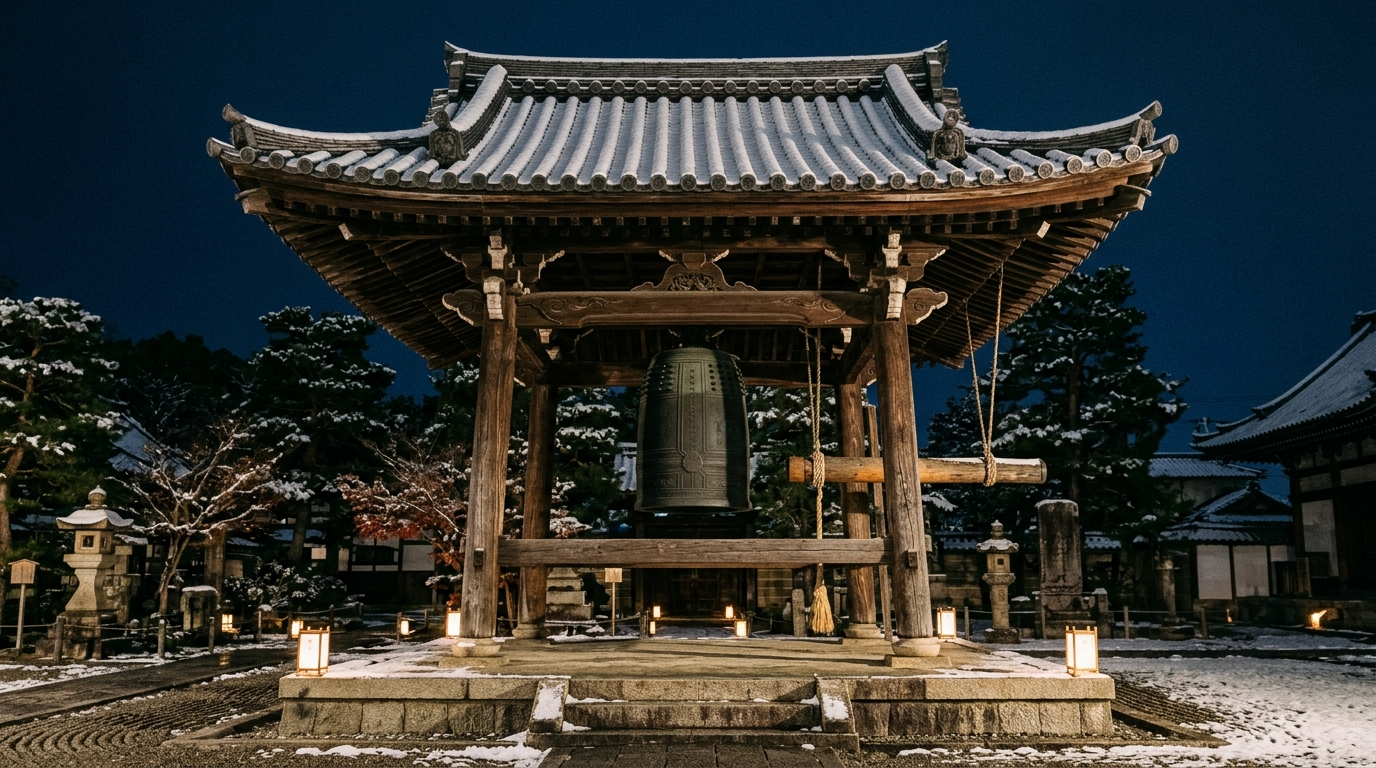
"One hundred and eight deep bronze strokes echoing through the winter night—Joya no Kane is Japan's Buddhist New Year's Eve ritual for releasing worldly attachments and welcoming the New Year with a clear mind."
Every December 31 across Japan, the slow, resonant tolling of temple bells marks the passage from the old year to the new. Known as Joya no Kane (除夜の鐘), this Buddhist custom originated in Song-dynasty Chinese Zen monasteries, reached Japan during the Kamakura period, and flourished nationwide during the Edo era. This guide explains the three traditional reasons for 108 strikes, why 107 strokes ring before midnight and the 108th rings in the New Year (alongside the modern rise of daytime Joseki no Kane), step-by-step temple etiquette (silent Gassho and no double-striking), the clear boundary with Shinto shrine bells, Toshikoshi no Oharai, and Kyoto's Okera Mairi, and official participation rules at four iconic temples: Chion-in, Zōjō-ji, Sensō-ji, and Kan'ei-ji.
As the 108 temple strokes quiet the old year and open a fresh beginning, pause for a calm moment of reflection and draw a free traditional Japanese omikuji fortune slip for the year ahead.
30-Second Summary: Joya no Kane Meaning, Timing & Temple Etiquette
- Buddhist New Year's Eve Tradition: Rooted in Song-dynasty Zen monastic "108 bell" rites (Hyakuhachi-shō), brought to Japan in the Kamakura period, and popularized nationwide during the Edo period (it is a Buddhist temple rite, not a Shinto shrine rite).
- Three Explanations for 108: (1) 108 worldly desires (bonnō) calculated as 6 × 3 × 2 × 3 = 108; (2) Shiku Hakku (four and eight sufferings: 4 × 9 + 8 × 9 = 108); (3) The annual calendar (12 months + 24 solar terms + 72 micro-seasons = 108).
- Midnight Timing & Daytime Shift: Traditionally, 107 strikes sound on December 31 and the 108th strike rings just after midnight on January 1. Some temples begin at 0:00, while many modern temples hold afternoon/early-evening ringings called Joseki no Kane.
- Visitor Rules & Famous Temples: Join your palms silently in Gasshō (never clap) and pull the wooden striker once (never double-strike). Chion-in and Sensō-ji are viewing/listening only, while Zōjō-ji and Kan'ei-ji require advance tickets or registration.
1. What Is Joya no Kane? Buddhist Origins & History in Japan
Joya no Kane (除夜の鐘) literally means "the bell of New Year's Eve." The character jo (除) signifies clearing away the old so the new may arrive, and ya (夜) means night—referring to the night of December 31 (Ōmisoka). Unlike fireworks countdowns elsewhere in the world, Japan's traditional year-end soundscape is contemplative: the low, lingering vibration of large bronze temple bells (bonshō) ringing out 108 times across snowy neighborhoods and mountain valleys.
Historically, the practice traces back to Song-dynasty Chinese Zen monasteries, where monks struck the temple bell 108 times each morning and evening (Hyakuhachi-shō / 百八鐘) to awaken mindfulness. Zen masters introduced the custom to Japan during the Kamakura period (1185–1333); by the Edo period (1603–1868), it had evolved into a beloved New Year's Eve ceremony practiced by Buddhist temples across sects and cherished by ordinary townspeople nationwide.
Draw an authentic omikuji at our digital shrine to discover your fortune and receive a sacred message.
2. Why 108 Strikes? The Three Traditional Origins Explained
Why exactly 108 strokes? Japanese Buddhist tradition and classical East Asian calendar lore offer three enduring explanations, summarized in the table below.
| Traditional Theory | Numerical Formula | Spiritual & Cultural Meaning |
|---|---|---|
| 1. 108 Worldly Desires (Bonnō / 煩悩) |
6 sense bases × 3 feelings × 2 states × 3 time periods = 108 | The most widely cited Buddhist teaching: each strike dissolves one earthly craving, anger, or delusion troubling the human mind. |
| 2. Four & Eight Sufferings (Shiku Hakku / 四苦八苦) |
(4 × 9 = 36) + (8 × 9 = 72) = 108 | Symbolic Buddhist arithmetic representing the four core sufferings (birth, aging, illness, death) and eight human hardships, praying to cast them away. |
| 3. Complete Annual Calendar (Lunisolar Divisions) |
12 months + 24 solar terms + 72 micro-seasons = 108 | Totals every seasonal milestone of the classical East Asian year (12 months, Nijūshi-sekki, and Shichijūni-kō), honoring and closing the entire annual cycle. |
Inside the 108 Bonnō Formula: 6 × 3 × 2 × 3
In Buddhist psychology, human experience arises through six sense bases (rokkon): eyes, ears, nose, tongue, body, and mind (6). Each contact produces three reactions—pleasant, unpleasant, or neutral (3, giving 18). Every reaction can take two qualities—defiled by attachment or pure and unattached (2, giving 36). Finally, these unfold across the three realms of time—past, present, and future (3)—yielding 6 × 3 × 2 × 3 = 108 mental states to quiet before the New Year dawns.
3. Timing of the 108 Strikes & Modern Shift to Joseki no Kane
Under the classic tradition, temples ring 107 strokes during the final hours of December 31 to release the departing year's worldly attachments, then sound the final 108th stroke just after 0:00 AM on January 1 so worshipers cross into the New Year unburdened by delusion.
Practice varies by sect and local custom, however. Certain renowned temples—such as Sensō-ji and Kan'ei-ji in Tokyo—begin ringing right at midnight (0:00 AM) rather than beforehand, while others start earlier in the evening to finish before midnight.
The Growing Trend of Daytime "Joseki no Kane" (除夕の鐘)
In recent years, an increasing number of Japanese temples hold their 108 bell strokes during the afternoon or early evening of December 31, called Joseki no Kane. This thoughtful adaptation respects nearby residents' sleep, avoids freezing midnight temperatures, and allows families with children and older visitors to join comfortably—while preserving the exact Buddhist spirit of year-end reflection.
4. How Visitors Strike the Bell: 4-Step Buddhist Temple Etiquette
If you visit a neighborhood or historic temple that welcomes public bell-ringers, remember that you are participating in a Buddhist ceremony. Above all, never clap your hands (clapping belongs to Shinto shrines) and never double-strike the bell.
Confirm Tickets, Registration & Offering (Myōgaryō) First
Temples differ widely: some distribute same-day numbered tickets, others require advance booking weeks ahead, and major landmarks are viewing-only. When an offering is requested at a Buddhist temple, it is called myōgaryō (冥加料) rather than Shinto hatsuhoryō. Bring cash coins or bills as instructed and wear warm winter layers for outdoor lines.
Offer Silent Gasshō (Joined Palms) & Bow — Never Clap
When your turn arrives at the belfry, pause calmly before the bronze bell, press your palms silently together at chest level (Gasshō), and bow once. Do not clap twice as you would at a Shinto shrine.
Pull the Wooden Striker (Shumoku) Once Gently — No Double-Striking
Hold the rope attached to the suspended wooden beam (shumoku), draw it back smoothly, and guide it forward for one single, unhurried strike against the bell's lotus-shaped striking medallion. Pulling too hard causes the beam to rebound and hit the bronze a second time (double-striking is strictly forbidden, as it dulls the tone and risks cracking historic bells). Gently steady the rope afterward and listen to the long resonance.
Offer a Closing Gasshō Bow and Step Aside Smoothly
Once the deep vibration settles (or when temple attendants signal), join your palms again in quiet gratitude, bow once, and step promptly aside so the next person in line may ring without delay.
5. Buddhist Joya no Kane vs. Shinto New Year's Eve & New Year Rituals
Because Japanese families naturally experience both Buddhist and Shinto traditions on New Year's Eve, travelers often blend them together. Understanding the boundary between temples and shrines (explored year-round in our Shinto Shrines vs. Buddhist Temples Guide) makes December 31 far richer and prevents etiquette slip-ups.
| Aspect | Buddhist Temple (Joya no Kane) | Shinto Shrine (Year-End & New Year) |
|---|---|---|
| Bell Type & Sound | Bonshō (梵鐘): massive hanging bronze bell struck externally with a wooden beam; deep low resonance quieting worldly desires. | Hontsubo-suzu (本坪鈴): hollow shrine bell rung by shaking a braided rope; bright shimmering sound purifying the worshiper (see our Shinto Shrine Bell Guide). |
| Dec 31 Ritual | Joya no Kane (108 strikes) and year-end sutra services. | Toshikoshi no Ōharai: Great Year-End Purification using paper effigies (hitogata) to clear impurities (see our Oharai Purification Guide). |
| Prayer Gesture | Silent Gasshō (palms together, zero clapping). | Two bows, two claps, one bow (Nirei Nihakushu Ichirei). |
| New Year Flow | Reflect on the departing year as the 108 strokes fade into midnight. | Join Kyoto's Okera Mairi or continue into midnight Ninen-mairi and first shrine visit Hatsumōde. |
Nowhere is this harmony clearer than in Kyoto's Higashiyama district. After witnessing the monumental bell ringing at Buddhist Chion-in Temple, you can stroll a few minutes through Maruyama Park directly to Shinto Yasaka Shrine for Okera Mairi (をけら詣り)—held typically from around 7:30 PM on December 31 through early morning on January 1. Worshipers light a braided bamboo-fiber cord (hinawa) from sacred herbal okera-bi fire, gently swing the glowing ember in circles to keep it lit all the way home, and use that flame to cook New Year's ozōni soup for year-round health.
Crossing midnight from a temple bell into a shrine visit is known as Ninen-mairi ("two-year worship"), seamlessly opening Hatsumōde—Japan's first shrine pilgrimage of the year. Meanwhile, household Shinto ornaments welcoming Toshigami-sama should already be in place before December 31 (avoiding disrespectful one-night ichiyakazari); see our Oshogatsu Decorations Guide (Kadomatsu, Shimekazari & Kagami Mochi) for complete calendar rules.
6. Four Iconic Temples for Joya no Kane in Kyoto & Tokyo
Major landmark temples enforce strict participation policies on New Year's Eve. Use this verified comparison to choose whether you want to watch an awe-inspiring monastic spectacle or register ahead to strike a bell yourself.
| Temple (City & Sect) | Can Visitors Ring? | Typical Hours | Official Rules, Highlights & Nearby Route |
|---|---|---|---|
| Chion-in Temple (Kyoto / Head Temple of Jōdo-shū) |
Viewing only (no public ringing) | Typically starts around 10:20–10:40 PM | Japan's towering ~70-ton Great Bell (~3.3 m tall, ~2.8 m wide), rung by 17 monks (1 head rope + 16 side ropes) with dynamic rhythmic chants. Crowd entry limits apply; walking distance to Yasaka Shrine's Okera Mairi. |
| Zōjō-ji Temple (Tokyo / Daihonzan of Jōdo-shū) |
Yes (advance ticket required) | Held earlier in recent years (service ~9:30 PM; ringing 9:45–11:00 PM) | Requires an advance-issued Bell-Ringing Ticket (typically distributed from Dec 1; ¥2,000 myōgaryō per person; 4 people per group sharing 1 strike; verify current year's rules ahead). Striking backdrop of Tokyo Tower. |
| Sensō-ji Bentenyama Bell (Tokyo / Head Temple of Shō-Kannon-shū) |
Listening only (no public ringing) | Starts at 12:00 AM (Midnight) | Begins at midnight with 3 uncounted preliminary strokes (sute-gane) before local preservation group Hyakuhachi-kai rings all 108 strokes. Pair with Shinto Hatsumōde next door at Asakusa Shrine (Sanja-sama) and New Year's draws via our Sensō-ji Omikuji Guide. |
| Kan'ei-ji Temple (Ueno, Tokyo / Kanto Head Temple of Tendai-shū) |
Yes (advance application required) | First strike at 12:00 AM (Midnight) | Historic Tokugawa family temple in Ueno Park. Public bell-ringing operates by advance application with a ritual offering (myōgaryō); verify official registration dates ahead of December. |
Always Verify Current-Year Announcements Before Visiting
Starting times, advance ticket release dates, myōgaryō amounts, and crowd-control gates can shift from year to year. Always check each temple's official website in late November or December before making New Year's Eve travel plans, and dress warmly for winter outdoor waiting.
Frequently Asked Questions
- Why do Japanese temples ring Joya no Kane 108 times on New Year's Eve?
- Three traditional explanations are widely shared: the 108 worldly desires (bonnō) derived from 6 sense bases × 3 feelings × 2 states × 3 time periods = 108; the Shiku Hakku sufferings formula (4 × 9 + 8 × 9 = 108); and the complete East Asian calendar cycle (12 months + 24 solar terms + 72 micro-seasons = 108).
- What time does Joya no Kane start, and what is daytime Joseki no Kane?
- Traditionally, temples ring 107 strikes during the final hours of December 31 to release the old year's attachments and sound the 108th strike just after 0:00 AM on January 1 to open the New Year with a clear mind. Some temples begin right at midnight, while a growing number hold afternoon or early-evening ringings called Joseki no Kane out of respect for neighbors and to make participation easier for families and seniors.
- What is the proper etiquette for visitors striking a temple bell on New Year's Eve?
- First confirm ticket, advance registration, and myōgaryō offering rules. At the bell, offer a silent Gasshō bow with palms together—never clap, as clapping belongs to Shinto shrines. Pull the wooden striker (shumoku) back smoothly for one single gentle strike—double-striking from rebound is strictly forbidden to protect historic bronze bells—listen to the resonance, bow once more in Gasshō, and step aside promptly.
- Can visitors ring the bell at Chion-in, Zōjō-ji, Sensō-ji, or Kan'ei-ji, and how does Yasaka Shrine pair with it?
- Kyoto's Chion-in (17 monks ringing the ~70-ton Great Bell, typically starting ~10:20–10:40 PM) and Tokyo's Sensō-ji Bentenyama Bell (starting at midnight with 3 uncounted preliminary strokes before local group Hyakuhachi-kai rings 108 times) are viewing and listening only. Tokyo's Zōjō-ji (advance-issued Bell-Ringing Ticket, held earlier ~9:45–11:00 PM in recent years) and Kan'ei-ji (midnight start, advance application required) allow registered public participation—always verify current-year rules. In Kyoto, Chion-in pairs seamlessly on foot with Shinto Okera Mairi at nearby Yasaka Shrine.
Draw Your Omikuji Online
Draw an authentic omikuji at our digital shrine to discover your fortune and receive a sacred message.
More Japanese shrine traditions

February 7, 2026
Hatsumode: The First Shrine Visit of the New Year
Celebrating the New Year with 'Hatsumode' is one of Japan's biggest cultural events. Learn why millions visit shrines in January, how to return old charms, and the proper etiquette for setting your intentions for the year ahead.
November 28, 2026
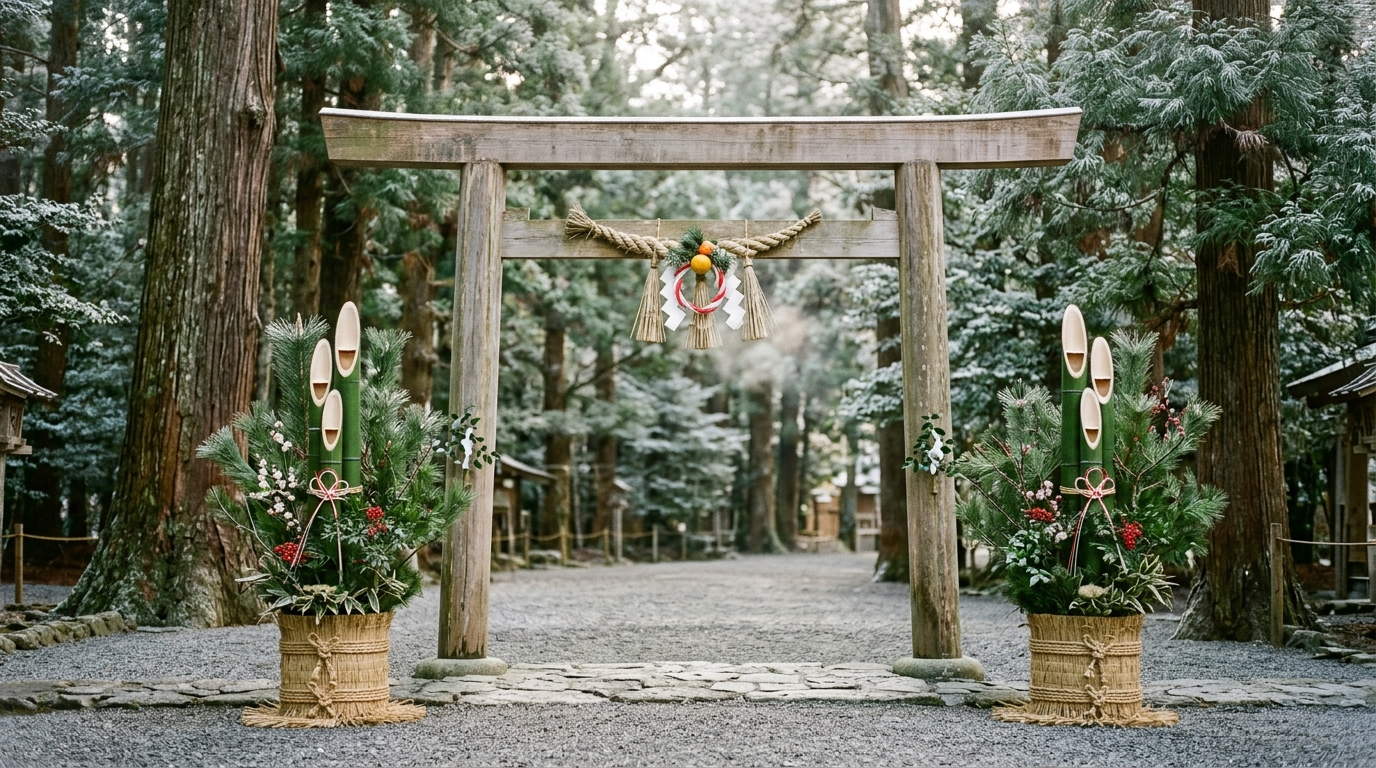
Japanese New Year: Kadomatsu, Shimekazari & Kagami Mochi (2026)
Learn the Shinto meaning of Oshogatsu decorations: Kadomatsu, Shimekazari & Kagami Mochi, Dec 28 date, Dec 29/31 taboos, Kagami Biraki & salt disposal.

October 30, 2026
Yasaka Shrine Kyoto Guide: Gion-zukuri Honden, Beauty Water & Night Visit (2026)
Visiting Yasaka Shrine in Gion, Kyoto? See why the South Gate is the true entrance, the National Treasure Honden, Biyosui beauty water & 24h lantern hours.